

From Farm to Shore: Massachusetts Department of Agricultural Resources Staff Explore Cape Cod’s Local Food System
Published on: July 31, 2026
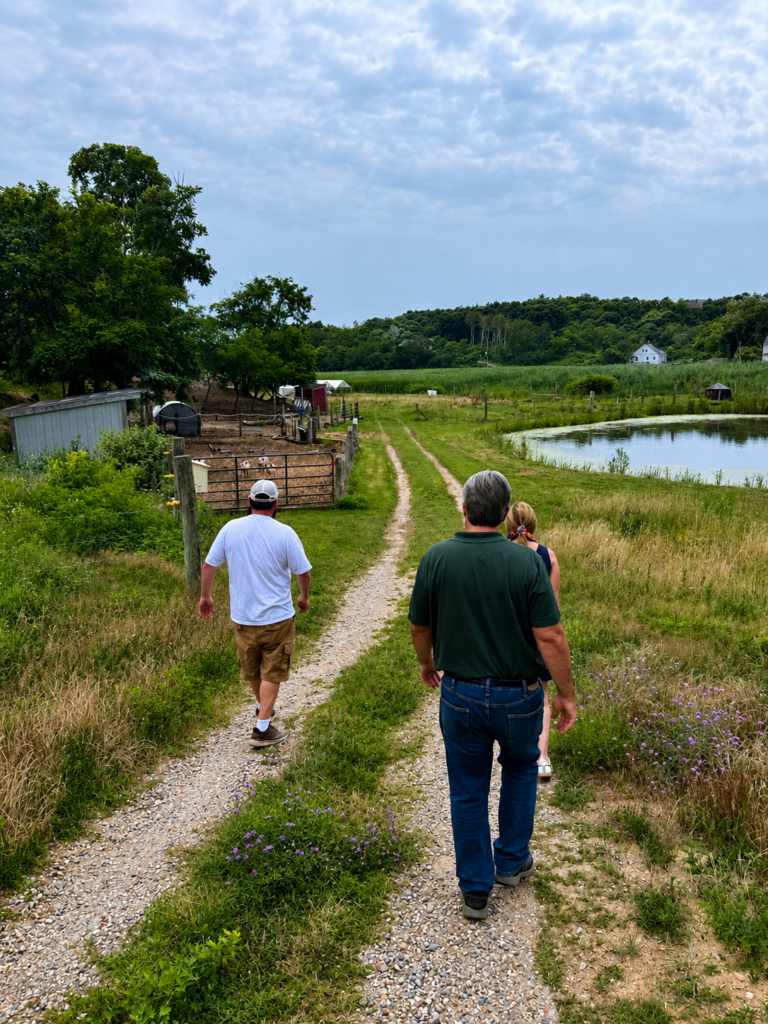
What does it take to keep local food growing on Cape Cod?
It takes farmers, shellfish growers, scientists, restaurants, community organizations, state agencies, and consumers all working together. Every partnership helps strengthen the connections that bring fresh, local food from our farms and waters to our tables.
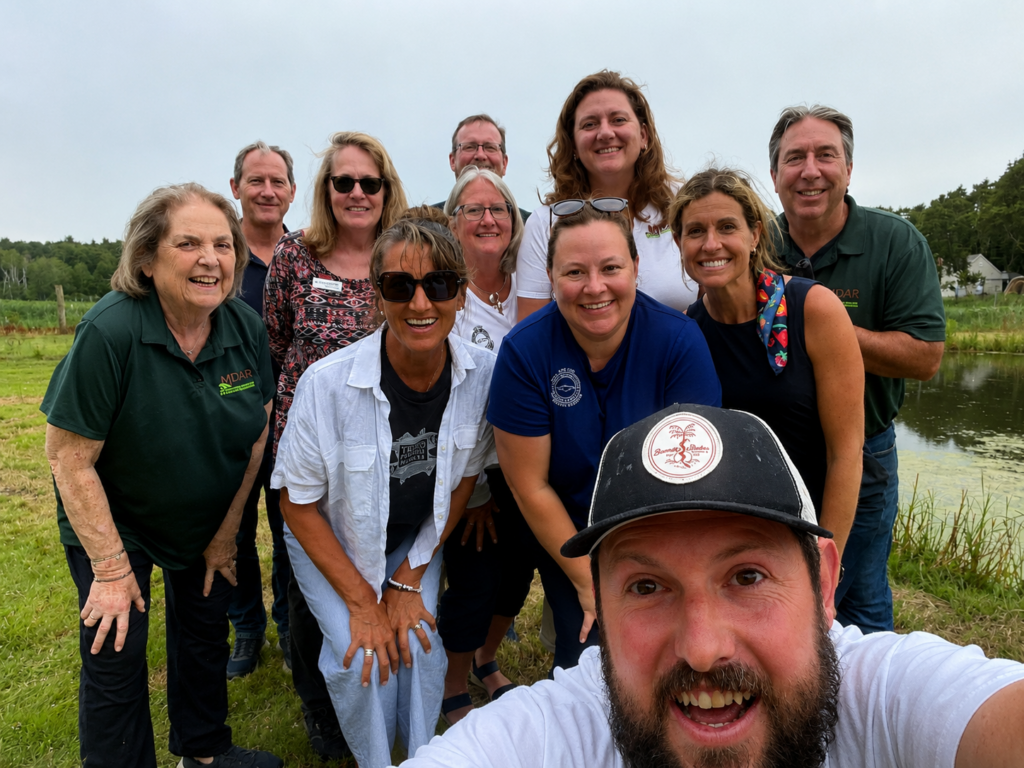
That spirit of collaboration was on display on July 21, when Massachusetts Department of Agricultural Resources (MDAR) Commissioner Ashley Randle, Deputy Commissioner Winton Pitcoff, and a team of MDAR staff visited Cape Cod for their annual regional tour.
Hosted by Buy Fresh Buy Local Cape Cod (BFBLCC), a program of Cape Cod Cooperative Extension, the tour also included Cape Cod Cooperative Extension Director Mike Maguire, Nutrition Educator Kim Concra, Sustainable CAPE’s Francie Randolph and Jackie Opitz, and, during the Wellfleet stop, Extension’s Woods Hole Oceanographic Institution (WHOI) Sea Grant Marine Program staff Rachel Hutchinson and Abigail Archer. Together, the group visited local farms, shellfish operations, and food businesses to learn directly from the people helping shape Cape Cod’s local food system every day.
Growing Opportunity at Bay End Farm
The first stop brought the group to Bay End Farm in Bourne, where owners Kofi Ingersoll and Erin Koh welcomed everyone for an in-depth look at the farm’s operations and its vision for the future.
Visitors toured the property, explored new equipment and barn improvements funded through a Food Security Infrastructure Grant (FSIG), and learned how investments like these help farms adapt, grow, and become more resilient.
Kofi also shared how the farm’s commercial kitchen and farm stand are helping more local food find its way to local tables. Instead of every crop being limited to a short harvest window, the commercial kitchen creates opportunities to transform fresh produce into jams, jellies, sauces, salsas, pickles, and other value-added products that can be enjoyed year-round. The on-site farm stand gives residents and visitors direct access to food grown just miles away, making it easier to support local agriculture with every purchase.
The visit demonstrated that investing in local farms is about more than buildings and equipment. It’s about helping farms continue feeding their communities while creating new opportunities for local agriculture to thrive.
Healthy Waters Support Healthy Communities
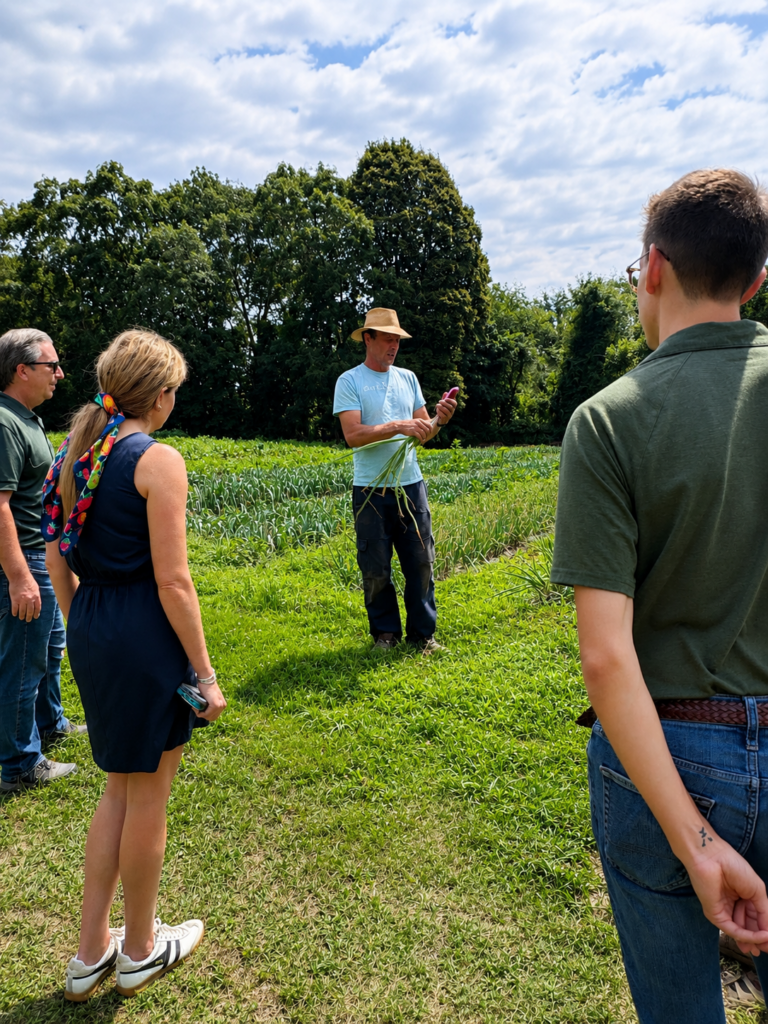
The tour then traveled to Mayo Beach in Wellfleet, where members of the Wellfleet Oyster Alliance welcomed the group to learn more about one of Cape Cod’s most iconic industries.
Board President Nancy O’Connell, Executive Director Carli Bertrand, Operations Manager Erika Suneson, board members and aquaculture farmers Alfred Pickard and Jake Puffer, and Town of Wellfleet Deputy Shellfish Constable and Shellfish Propagation Program Coordinator John “Johnny Clam” Mankevetch shared their knowledge and experience with the group.
Discussions covered wild shellfish harvesting, oyster and clam aquaculture, different growing methods, and the changing environmental conditions affecting Cape Cod’s coastal waters. Participants learned how shellfish growers continually adapt to changing conditions while balancing environmental stewardship, public health, and the long-term sustainability of an industry that supports local jobs, coastal communities, and the region’s identity.
One message became clear throughout the visit: good decisions begin with good science.
Shellfish growers emphasized the value of Barnstable County’s marine water quality monitoring programs and their long-standing partnership with Cape Cod Cooperative Extension’s Marine Program. Regular water quality testing helps identify changing conditions, supports responsible harvesting decisions, protects public health, and gives growers the information they need to plan for the future. Those data also help farmers and researchers work together to adjust practices, respond to emerging challenges, and protect one of Cape Cod’s most valuable natural and economic resources. As coastal waters continue to change, science-based partnerships like these are helping ensure Cape Cod’s shellfish industry remains healthy, resilient, and productive for generations to come.
Experiencing the Local Food System
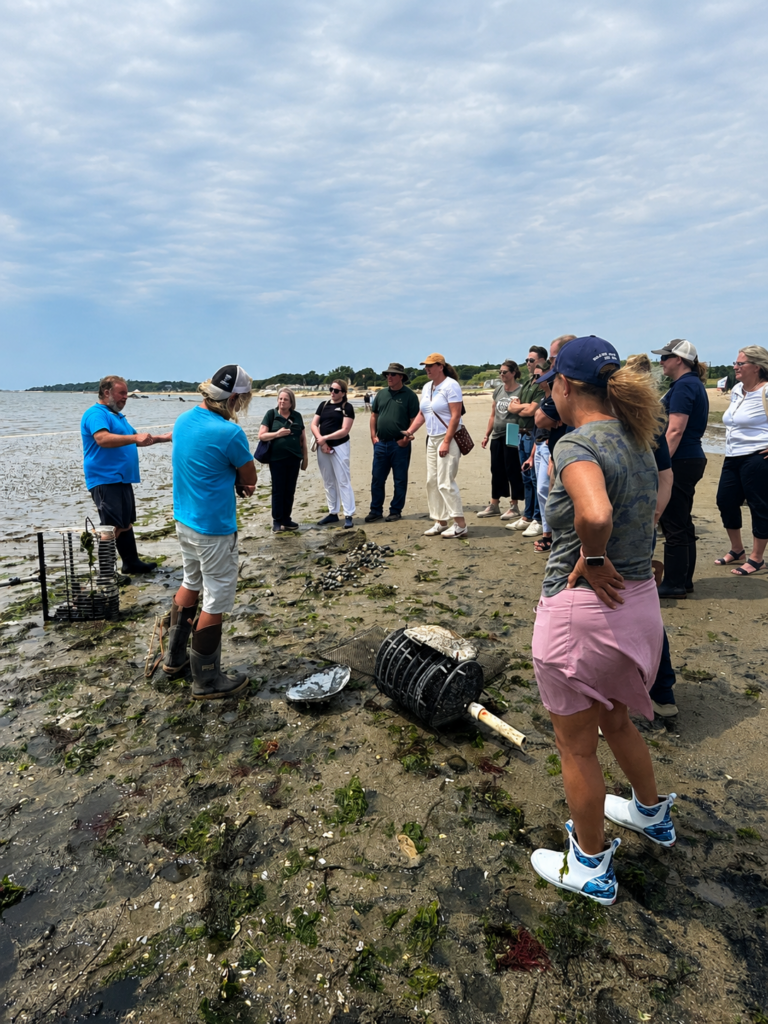
Lunch at The Bookstore & Restaurant in Wellfleet featured locally harvested seafood, giving everyone around the table the opportunity to experience the local food system they had spent the morning discussing.
The meal highlighted another important part of the local food economy: the connection between producers and the restaurants that proudly feature local ingredients. When restaurants source from local farms, fishermen, and shellfish growers, they help strengthen the regional economy while giving residents and visitors the opportunity to enjoy the freshest flavors Cape Cod has to offer.
The lunch also reflected the purpose behind MDAR’s support of regional Buy Local organizations. Through grants and partnerships, MDAR recognizes and supports organizations like Buy Fresh Buy Local Cape Cod, one of Massachusetts’ regional Buy Local organizations. These organizations connect farmers, fishermen, shellfish growers, food businesses, and consumers while increasing awareness of locally produced food and making it easier for people to find, buy, cook, and enjoy local products.
As a program of Cape Cod Cooperative Extension, Buy Fresh Buy Local Cape Cod works year-round to strengthen those connections throughout Barnstable County through producer directories, seasonal guides, educational resources, recipes, and community partnerships. Whether someone is looking for a farm stand, a shellfish grower, a farmers market, or a local restaurant serving Cape-grown ingredients, BFBLCC helps connect consumers with the people behind their food.
A Legacy of Farming at Hillside Farm
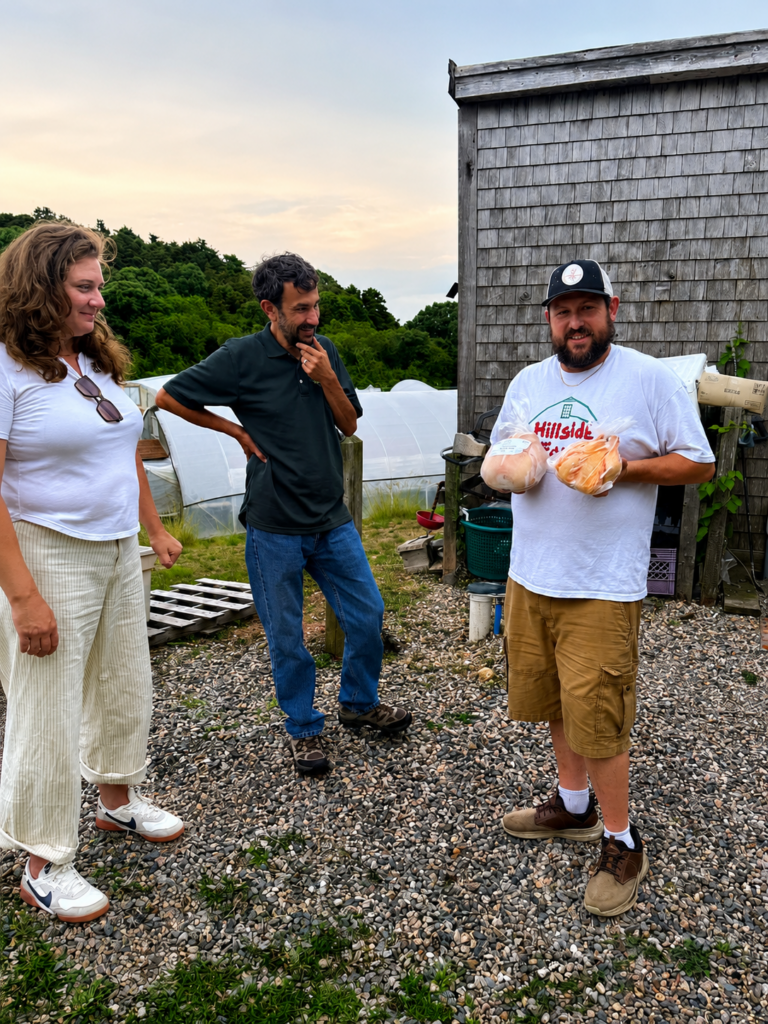
The final stop brought the group to Hillside Farm in North Truro, where seventh-generation farmer Drew Locke shared the history of his family’s farm and his vision for its future.
Visitors met the farm’s chickens, pigs, sheep, and cattle, toured the produce fields, and learned about plans to continue growing the operation. Drew also spoke about his hope of one day passing the farm on to his children, creating an eighth generation of family farmers on land his family has cared for for generations.
Family farms like Hillside Farm represent more than local food production. They preserve open space, strengthen rural communities, and carry forward generations of agricultural knowledge, stewardship, and hard work. Supporting local agriculture today helps ensure those traditions can continue tomorrow.
Building a Stronger Local Food Future
By the end of the day, one message was clear: a strong local food system doesn’t happen by accident. It grows through partnerships, investment, innovation, and the people who are committed to producing food right here on Cape Cod.
Every stop on the tour demonstrated that no one grows a local food system alone. Farmers, shellfish growers, scientists, educators, restaurants, nonprofit organizations, and state partners each play an important role in helping local food succeed. When those connections are strong, Cape Cod’s communities, economy, and natural resources are stronger, too.
Buy Fresh Buy Local Cape Cod is proud to be part of that work. As one of Massachusetts’ recognized regional Buy Local organizations, BFBLCC connects residents and visitors with local farms, fisheries, shellfish growers, farmers markets, restaurants, and food businesses throughout Cape Cod. From educational resources and seasonal guides to producer directories and recipes, the program helps make choosing local food simple, accessible, and impactful.
Every time you shop at a farm stand, order local seafood, visit a farmers market, or support a Cape Cod food producer, you’re investing in the people who care for our land and waters while helping ensure a vibrant local food system for future generations.
Ready to discover what’s growing near you? Explore Buy Fresh Buy Local Cape Cod’s online directory to find local farms, farmers markets, seafood, shellfish, restaurants, recipes, and seasonal products throughout Cape Cod.
Cape Cod Cooperative Extension: Working for You
Follow Cape Cod Cooperative Extension on Facebook and Instagram for resources, updates, and events.
Learn more about all our programs at capecod.gov/extension.
Legal Disclaimer:
EIN Presswire provides this news content "as is" without warranty of any kind. We do not accept any responsibility or liability for the accuracy, content, images, videos, licenses, completeness, legality, or reliability of the information contained in this article. If you have any complaints or copyright issues related to this article, kindly contact the author above.
